Malika
Verified buyer
Rating: 5 out of 5
Excellent products that I’ve been ordering for over three years.


Helps maintain normal vision
Contributes to normal brain and heart function
During pregnancy, contributes to the normal development of the foetus's eyes
Format
Purchase option
Normal vision
Brain function
Heart function
250 mg
of DHA per capsule
100%
plant-based
0
solvent
Schizochytrium sp.
410 mg · 250 mg OF DHA
Schizochytrium sp.
410 mg · 250 mg OF DHA
1 capsule
per day
45 days
per bottle
With the first meal
Over time
M1
A daily intake covered
M2
Brain and vision supported
M3
A lasting balance
* Valeurs Nutritionnelles de Référence
Additives: Bulking agent: Hydroxypropyl starch ; Thickener: Glycerol (coco traces) ; Water ; Bulking agent: Vegetable oil ; Antioxidant: Natural tocopherols ; Antioxidant: Ascorbyl palmitate
Allergens
Formulé sans allergènes.
Contraindications
Celiac disease. It is recommended for pregnant and breastfeeding women to contact their doctor before taking any supplements.
Formulated and packaged in France
100% plant-based
Solvent-free extraction
Suitable during pregnancy and breastfeeding
No unnecessary additives
Omega 3 are polyunsaturated fatty acids found in oily fish and certain vegetable oils (chia, flax, perilla). They are described as essential because the body cannot synthesise them and they must be supplied by the diet to benefit from their many virtues. Omega 3 intake, to meet certain needs, can be achieved through food supplements alongside a varied and balanced diet.
The origin of omega-3 is mainly linked to the presence of marine algae. Algae are the first producers of omega-3 in the marine food chain. They naturally contain long-chain fatty acids such as eicosapentaenoic acid (EPA) and docosahexaenoic acid (DHA). Oily fish accumulate these omega-3 fatty acids by feeding on algae or on other marine organisms that consume algae. Thus, the main source of omega-3 for fish is indirectly algae. As for plant sources of omega-3, such as flax seeds and chia seeds, they contain alpha-linolenic acid (ALA), a short-chain fatty acid. Humans can partly convert ALA into EPA and DHA, but this conversion is limited.
Signs of an omega-3 deficiency may include dry skin, dull hair, brittle nails, difficulty concentrating and remembering, mood swings, impaired vision and trouble falling asleep. Omega 3 supplementation can help meet some of these needs.
Plant-based omega-3 can be found in several sources, in particular flax seeds, chia seeds and nuts. Some vegetable oils are also rich in omega-3, such as flaxseed oil, rapeseed oil and soybean oil. It is important to note that these oils should be eaten raw or added to food after cooking, as they are heat-sensitive and can lose their beneficial properties when heated. Marine algae, such as nori, are a direct source of omega-3, including DHA and EPA, particularly beneficial for people following a vegan or vegetarian diet.
Flax seeds, chia seeds, nuts (especially walnuts), rapeseed oil (rich in omega 3), marine algae, spirulina, broad green leafy vegetables (such as spinach and kale) and soybean oil (oils rich in omega 3).
Visit our Help Center or contact us at support@cuure.com for any questions.
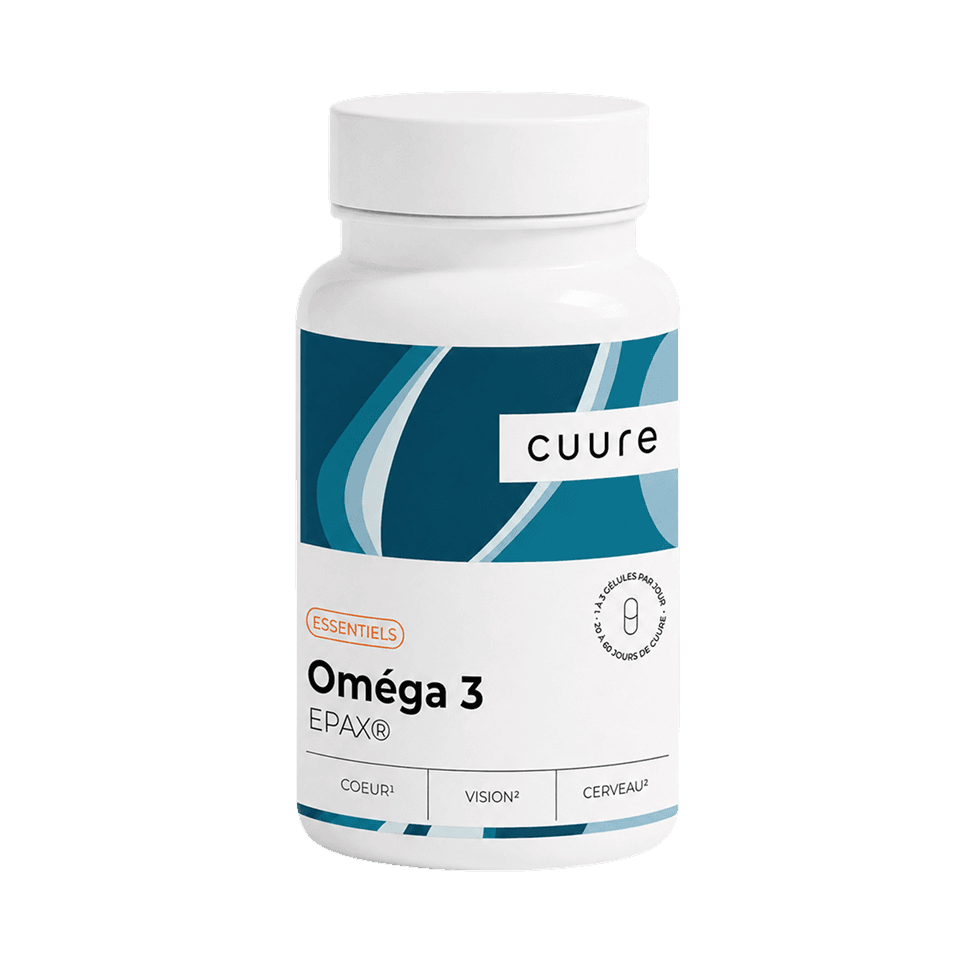 best-seller
essentials
Omega 3
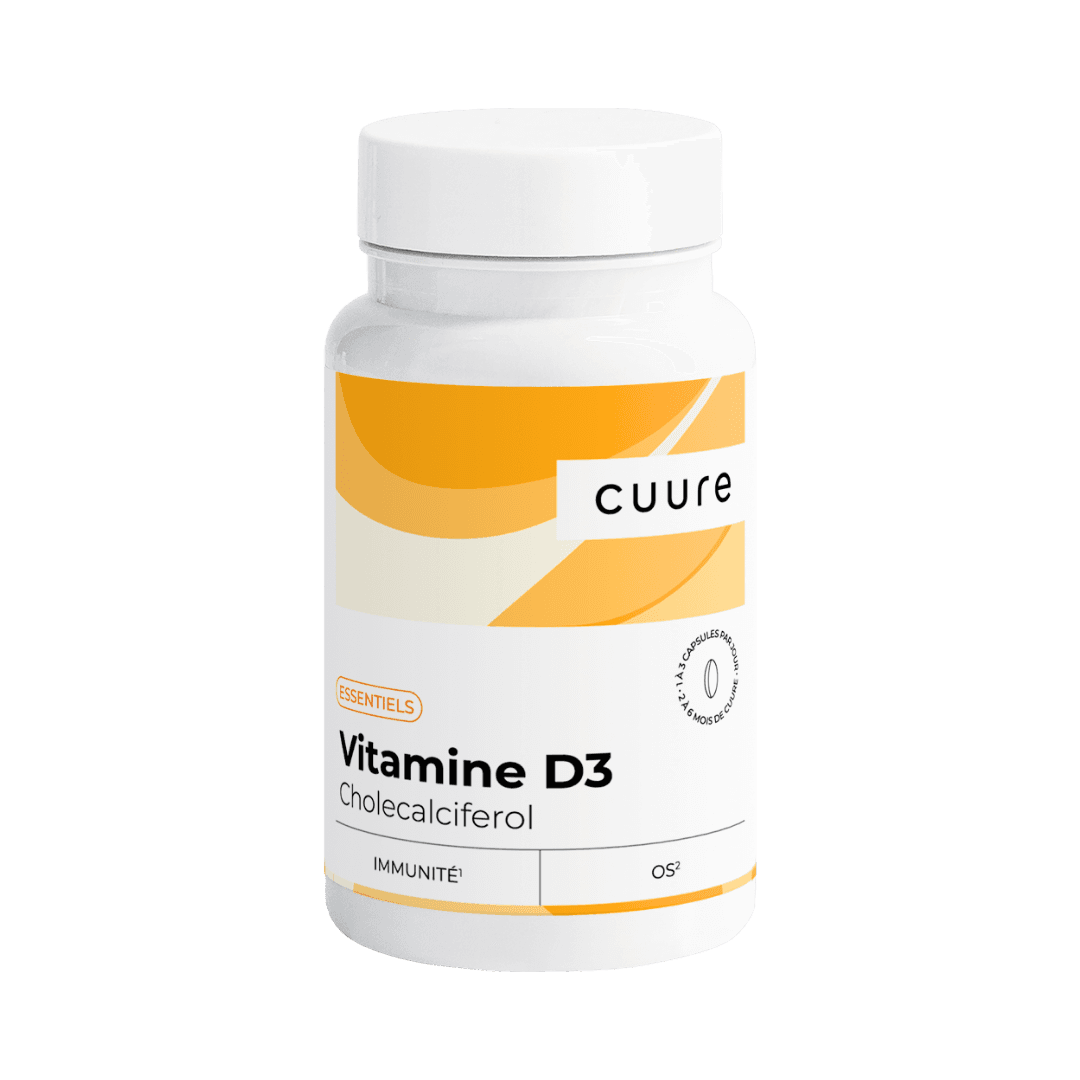
essentials
Vitamin D3
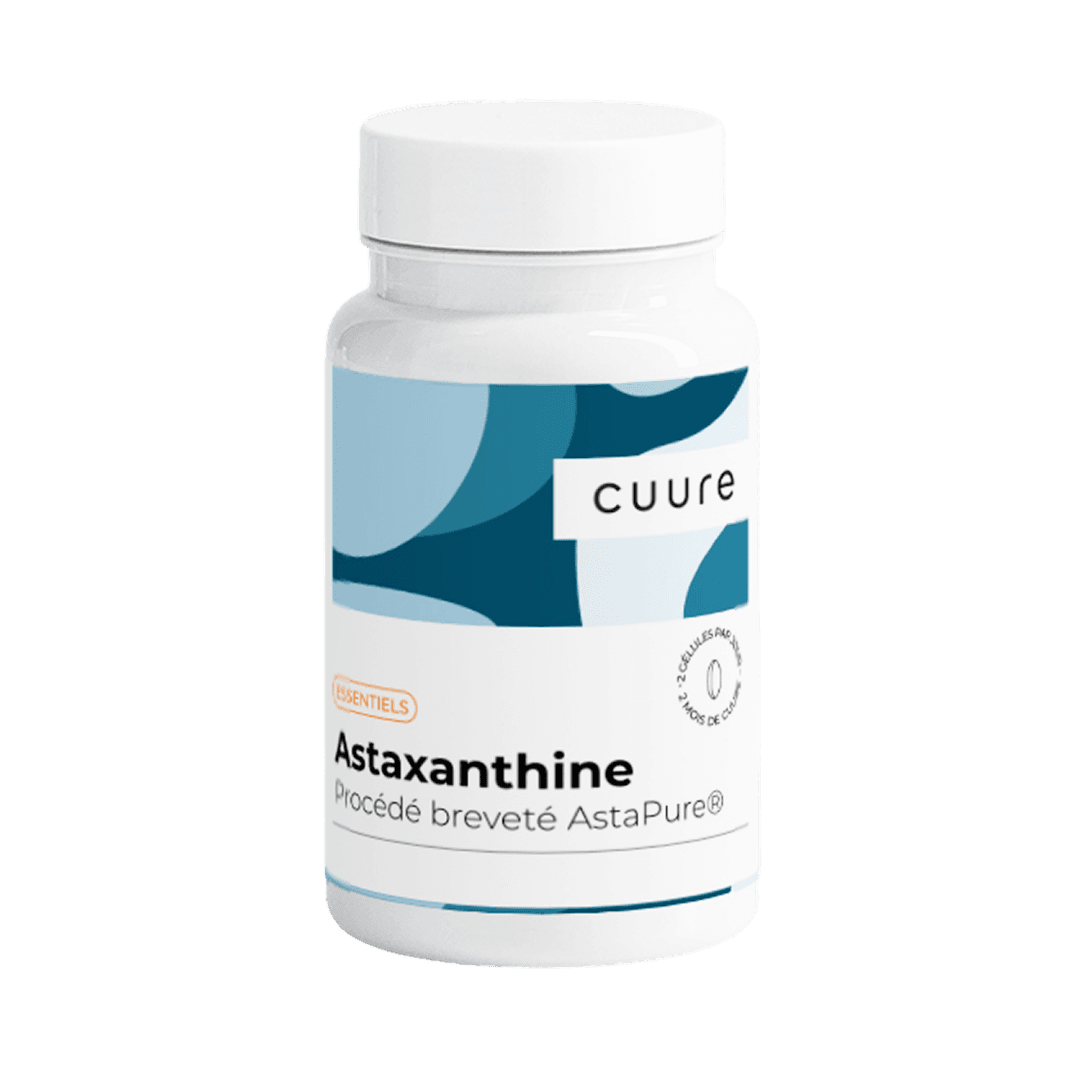
essentials
Astaxanthin
This product is rated 4.5 out of 5 stars. We collected more than 177 reviews.
Malika
Verified buyer
Excellent products that I’ve been ordering for over three years.
Minella
Verified buyer
No written review.
Jeanne V.
Verified buyer
No written review.
Florence
Verified buyer
No written review.
Corine
Verified buyer
No written review.
All our food supplements are duly registered with the Directorate General for Food (DGAL), as required by law. Our products are not intended to diagnose, treat, cure or prevent any disease. If you are ill, pregnant or breastfeeding, consult your doctor before taking any supplement.