Manon
Verified buyer
Rating: 5 out of 5
No written review.
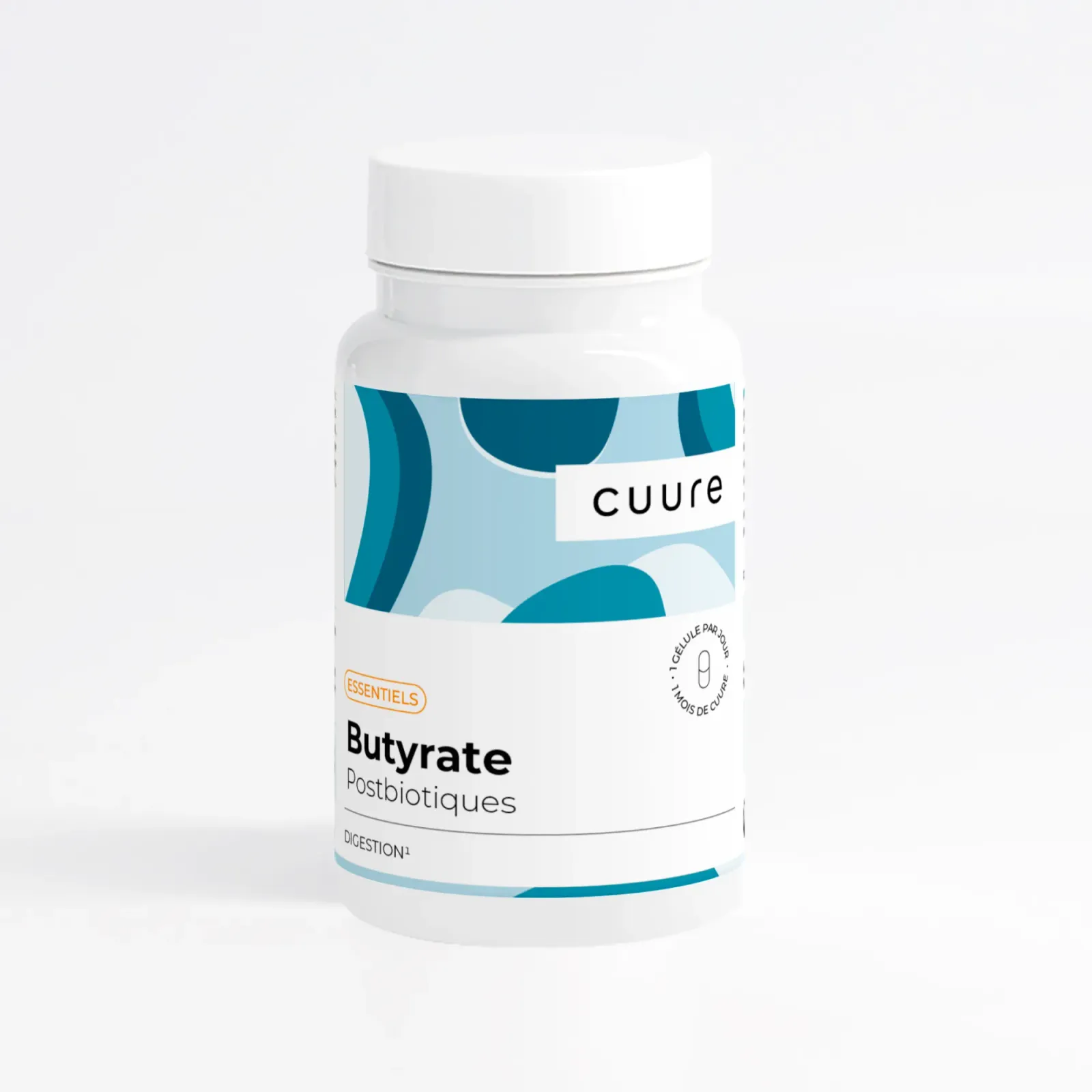

Supports the maintenance of the digestive tract's mucous membranes
Galenic form with targeted release in the colon
250 mg of sodium butyrate per capsule
Format
Purchase option
250 mg
of sodium butyrate
30%
of the NRV for vitamin B2
Colon
targeted release
A key postbiotic
250 MG · COLON RELEASE
A key postbiotic
250 MG · COLON RELEASE
1 capsule
per day
30 days
per bottle
With the first meal
As a 3-month course
D7
Targeted release
M1
Supported mucous membranes
* Valeurs Nutritionnelles de Référence
Additives: Plant based anti-caking agent: Microcrystalline cellulose ; Coating agent: Hydroxypropylmethylcellulose ; Coating agent: Anionic methacrylate copolymer (Eudraguard® Biotic)
Allergens
Formulé sans allergènes.
Contraindications
Not recommended for children, pregnant or breast-feeding women.
It is recommended for pregnant and breastfeeding women to contact their doctor before taking any supplements.
Formulated and packaged in France
Galenic form with targeted release
100% plant-based
No unnecessary additives
Butyrate is a short-chain fatty acid naturally present in our body and produced by the fermentation of dietary fibre by bacteria in the colon.
The history of butyrate is linked to the evolution of scientific understanding of short-chain fatty acids. The first discoveries about butyric acid date back to the early 19th century, with the French chemist Michel Eugène Chevreul who first isolated it in 1814. Over the decades, scientists studied its chemical properties and applications, notably in perfumes and flavours. The idea of using it as a food supplement emerged more recently, in connection with advances in understanding the gut microbiota and its role in health.
Prebiotics: these are non-digestible fibres found in certain foods such as fruits, vegetables and cereals. They feed the bacteria in our gut and support their growth. Probiotics: these are the good bacteria that help balance the gut flora. Postbiotics: these are the metabolic products generated by probiotics when they feed on prebiotics, such as butyrate. In short, prebiotics feed the good bacteria, probiotics provide them and postbiotics result from their interaction. Their actions differ and the outcome can vary from one person to another.
Foods rich in butyrate include fermented dairy products such as butter and cheese, as well as certain fibre-rich foods such as leafy green vegetables, whole grains and legumes. Including these foods in your diet can help maintain adequate levels of butyrate in the body.
The main difference lies in their form. Butyric acid is a short-chain fatty acid, also known as butanoic acid, generally present as a free acid in various sources, including foods and gut bacteria. Butyrate is the ionised form of butyric acid, often as a sodium, potassium or magnesium salt. In the biological context, butyrate is the form mainly used by intestinal cells.
Butyrate is mainly produced by gut bacteria during the fermentation of dietary fibre. To support its production, it is therefore recommended to eat a variety of fibre-rich foods.
Visit our Help Center or contact us at support@cuure.com for any questions.
 season
essentials
Probiotic Blend
 new
essentials
Prebiotics
 new
essentials
L. Gasseri
This product is rated 4.5 out of 5 stars. We collected more than 25 reviews.
Manon
Verified buyer
No written review.
Andrea
Verified buyer
It’s not quite as bloated
Laëtitia
Verified buyer
We don’t yet have enough perspective to see the results
Astrid
Verified buyer
No written review.
Viviane
Verified buyer
No written review.
All our food supplements are duly registered with the Directorate General for Food (DGAL), as required by law. Our products are not intended to diagnose, treat, cure or prevent any disease. If you are ill, pregnant or breastfeeding, consult your doctor before taking any supplement.